Frequently Asked Questions
Everything you need to know about Urban Farming with Urban Ponics
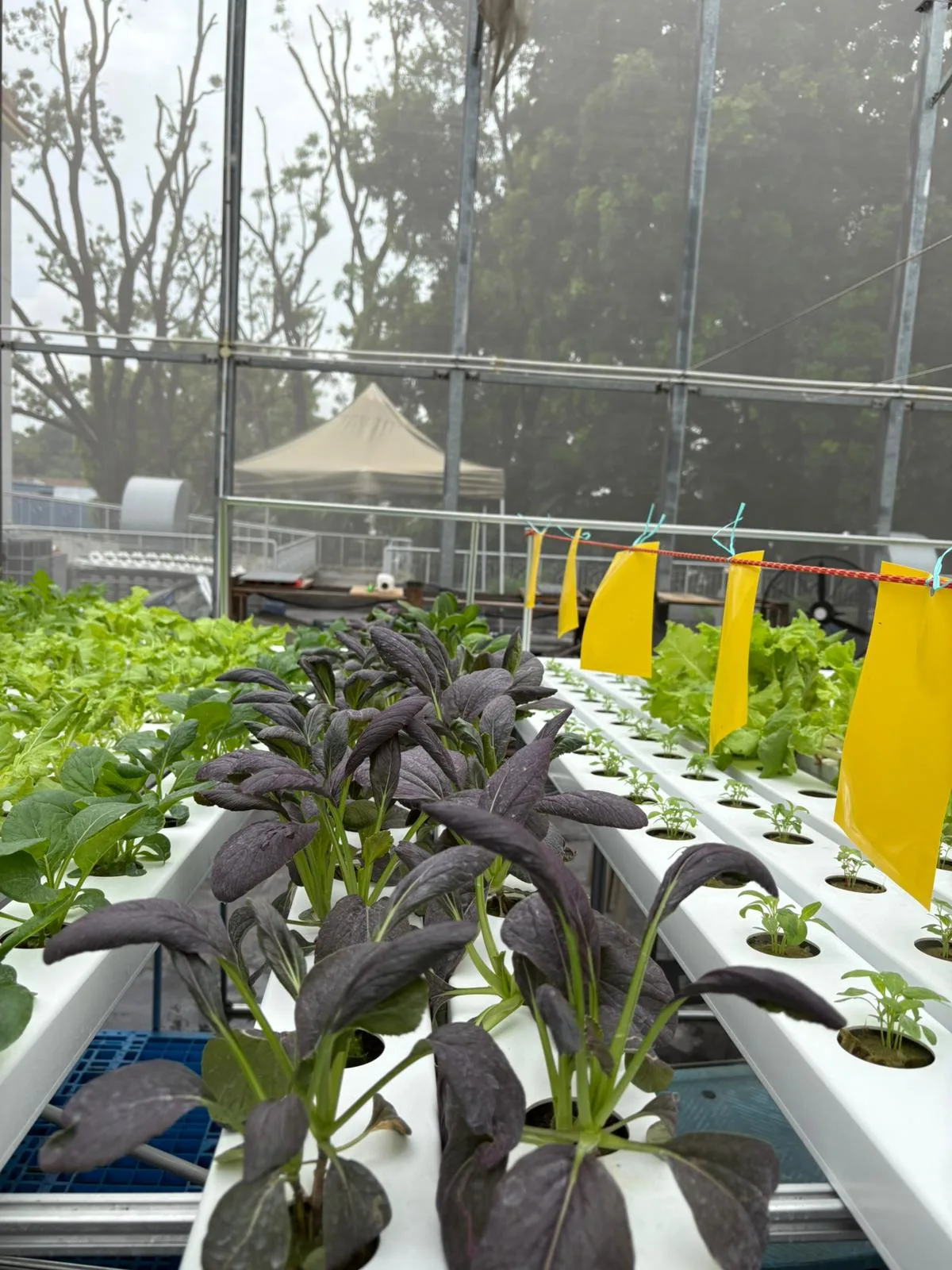
It is a compact food-producing ecosystem that grows more than 50 different crops side by side — leafy greens, herbs, fruiting and even tropical crops — in one system. Unlike monoculture vertical farms that grow a single crop, our ecosystems mirror how nature grows: diverse, resilient, and productive all year round. No one else sells polyculture systems.
Because of NACAR, our proprietary biostimulant and the biological engine of every ecosystem. Its complete nutritional profile serves every species at once, enabling greater crop diversity, better nutrient absorption, less plant stress, and stable production all year round.
Urban Farming is the practice of growing food in urban environments, such as rooftops, courtyards, balconies, and unused city spaces. Unlike traditional farming, it uses advanced techniques like hydroponics, aeroponics, and mistponics to grow crops without soil, using significantly less water and space.
Urban Farming stands apart from Vertical Farming by addressing challenges like high costs and energy use, offering a more sustainable and accessible solution. It complements traditional farming by empowering people to grow pesticide-free, highly nutritious food with a low carbon footprint. Urban Ponics systems are designed for real-world conditions, not controlled indoor environments.
We use a combination of advanced growing methods including mistponics (nutrient mist sprayed directly on roots), aeroponics (roots suspended in air with nutrient spray), hydroponics (roots in nutrient-rich water), and NFT (Nutrient Film Technique). Our Full Spectrum Farming approach selects the best method for each crop and climate.
Our systems support a wide variety of crops including leafy greens (lettuce, spinach, kale), herbs (basil, mint, cilantro), microgreens, tomatoes, peppers, cucumbers, strawberries, and many more. Each ecosystem is designed to optimize conditions for your specific crop selection.
Our systems use up to 95% less water compared to traditional soil-based farming. Water is continuously recycled through the system, with only minimal amounts lost to evaporation and plant transpiration. The adiabatic cooling systems in our Oasis ecosystem also recycle water for climate control.
Yes! We design ecosystems specifically for different climate conditions. The Oasis system handles desert climates up to 50°C, the Tropical system manages humid environments, the Walipini works in temperate zones with temperature extremes, and the Urban Jungle is designed for city environments.
NACAR is our proprietary plant nutrition formula containing 95+ essential minerals, trace elements, amino acids, humic substances, and adaptogens. It provides everything plants need to thrive, going far beyond standard N-P-K fertilizers to deliver truly comprehensive nutrition.
Absolutely. We offer full turnkey solutions including design, installation, system calibration, and comprehensive staff training. We also provide ongoing maintenance and support services to ensure your Urban Farm operates at peak efficiency.
Every ecosystem is sized and quoted for the property — the structure, the climate, the growing systems inside it and the crop plan all move the figure, so a published starting price would mislead more than it helps. Book a call and we build the numbers for your situation, including what part of your current produce purchasing the ecosystem would replace.
23 working installations across 11 countries on 5 continents: The Netherlands, Ireland, United Arab Emirates, Uzbekistan, India, Singapore, South Africa, Curaçao, Venezuela, Colombia, Uruguay. Each one is engineered for its local climate and the client’s menu — see the full list on the Reference projects page.
Hotels benefit through reduced food costs, unique guest experiences (farm-to-table tours), sustainability credentials, and fresh, ultra-local produce. Our greenhouse systems can be designed to complement luxury architecture while providing practical food production.
Biolysis is our waste-to-nutrient technology that transforms organic waste from your farm and kitchen into valuable plant nutrition. This closed-loop system reduces waste disposal costs by up to 90% while providing sustainable, ongoing nutrition for your crops.
Seen across climates
One engine, every setting
Tell us about your property.
Tell us about your project and we’ll come back with a tailored plan — the crop mix, the experience and the numbers, from first sketch to first harvest.
Start here
Tell us about your property
No obligation — a tailored plan and numbers for your project.